
City commutes, weekend gateways, or long-distance highway drives, no matter how or where you drive, one thing plays a critical role in every journey: having the right type of tyres for your car. Given India’s diverse driving conditions, from monsoon-drenched roads to dusty highways and uneven rural paths, choosing the correct type of car tyres is key to ensuring comfort, control, and most importantly, safety.
Understanding the different options available can feel like a technical maze, but it doesn’t have to be. Let’s break down the major types of tyres for cars, their unique benefits, and how to pick the right set based on your car, lifestyl,e and road conditions.
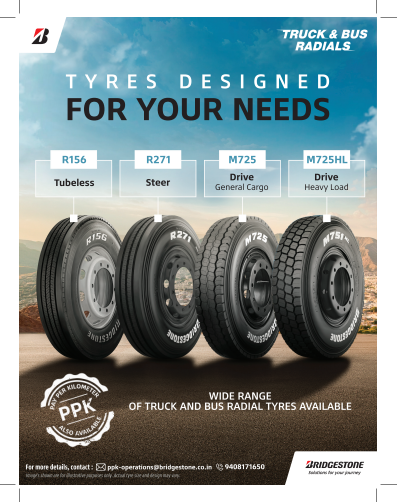
Disclaimer: Images (s) shown are for illustrative purposes only. Actual product specifications, including tyre size and design, may vary.
Why Choosing the right Tyre Matters?
Your tyres are the only contact point between your car and the road. They influence braking, handling, fuel efficiency, ride comfort, and even noise levels. Poor tyre choices can lead to faster wear, reduced safety, and increased running costs.
Fact:
A tyre is more than just rubber. It is a complex, highly engineered structure made from over 100 raw materials, comprising multiple layers such as tread, carcass, belts, sidewall, bead, etc and each serving a distinct function to deliver safety, comfort, performance, and other critical parameters.
Types of Tyres For Cars
1. Construction Types
Tyres are primarily classified by their internal construction, which affects performance, comfort, and durability.
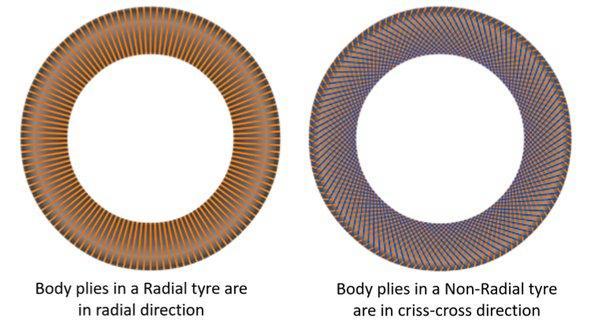
Disclaimer: Images (s) shown are for illustrative purposes only. Actual product specifications, including tyre size and design, may vary.
Radial Tyre
Radial tyres have their ply cords/body ply arranged radially (radial direction), at 90° to the direction of travel. This design allows the sidewalls to flex independently from the tread, resulting in better comfort, improved fuel efficiency, and a smoother ride. Steel belts used in radial tyres offer better puncture resistance than the bias tyre with Nylon breakers. Radial tyres also dissipate heat more effectively, making them ideal for high-speed driving and long-distance travel, they are standard in most passenger cars today.
Bias Tyre
Bias-ply (or cross-ply) tyres have layers of ply cords crisscrossed at angles, typically 45° to the direction of travel. However, bias tyres generate more heat, offer less flexibility, and provide a harsher ride compared to radial tyres.
2. Air Retention Types (Tubeless & Tube-Type Tyres)
Tubeless Tyre
In a Tubeless tyre, the tube is integral within the tyre known as the inner liner. Tyres are fitted without a tube and the inner liner plays a crucial role in maintaining the tyre's shape and ensuring it holds air pressure adequately. In tubeless tyres, the valve is connected to the wheel itself, allowing for more efficient air pressure control.
Tubeless tyres ensure slower air leakage (in case of a puncture, the air escapes gradually), deliver better fuel efficiency, improve heat dissipation, and allow easier repairs, making them safer and more reliable. That’s why they have become the standard fitment in most new cars.
Tube-Type Tyre
Tube-type tyres come with the tube. The tube plays a crucial role in maintaining the tyre's shape and ensuring that it holds air pressure adequately. During the mounting process, the tube is inserted into the tyre and then fixed onto the wheel. In tube-type tyres, the valve or nozzle is connected to the inner tube, forming an integral part of the tube.
3. Usage Types
Standard Tyres
Ideal for: Urban, semi-urban, and rural drivers on paved or semi-paved roads
Standard tyres are designed to deliver reliable performance across typical road conditions, smooth city roads, occasional highway stretches, and light monsoon rains. They offer a balanced mix of grip, durability, and comfort, making them ideal for daily commuting and regular urban driving.
Benefits:
- Balanced grip and fuel efficiency
- Extended tyre life
- Better Durability
Performance Tyres
Perfect for: High-speed enthusiasts
If you often drive on expressways or own a high-powered vehicle, performance tyres are designed for superior handling, precise steering, and stability at higher speeds.
Benefits:
- Enhanced cornering and braking
- Excellent grip at high speeds
- Responsive steering feel
Touring Tyres
Perfect for: Highway travellers and road trippers
Touring tyres are designed for comfort, quietness, and long-distance durability. These are the tyres to go for if you frequently drive across states or love long weekend getaways.
Benefits:
- Quiet, comfortable ride
- Excellent mileage
- Consistent performance over long distances
Off-Road & SUV Tyres
Perfect for: Adventure seekers and rural commuters
Whether you’re exploring Ladakh or navigating village trails, off-road tyres offer the ruggedness you need. These tyres are built tough with reinforced sidewalls and aggressive tread patterns.
Benefits:
- High durability on rough terrain
- Excellent traction & grip on gravel, mud, or sand
- Strong sidewall protection
4. Run-Flat Tyre (Technology)
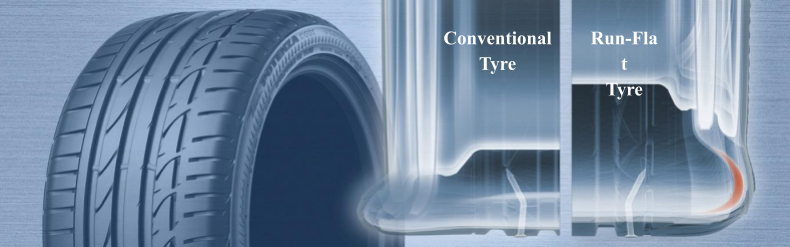
Disclaimer: Images (s) shown are for illustrative purposes only. Actual product specifications, including tyre size and design, may vary.
Run-flat tyres allow you to keep driving (typically up to 80 km at a speed up to 80 km/h*) even after a puncture or air loss. It’s ideal for cities or highways where finding immediate roadside help might be difficult.
Benefits:
- Drive to safety even after a puncture
- No need to carry a spare tyre
- Increases boot space
How Do I Choose the Right Type of Tyre for My Car?
When selecting the appropriate types of car tyres, consider:
- Vehicle Type: Whether you own a hatchback, sedan, or SUV, your tyres should match the size, load index, speed symbol, and performance needs of your vehicle for optimal stability and control.
- Driving Conditions: City roads, highways, or rough rural paths each demand different tyre qualities. Choose a tyre that performs well on the surfaces you drive on most often.
- Driving Style: Your habits behind the wheel influence tyre performance. Aggressive driving puts more stress on tyres, requiring a strong grip and stability for safety. A calmer driving style typically benefits from tyres that prioritize comfort and efficiency, ensuring a smoother ride and better fuel economy.
Tyre Maintenance Tip:
No matter the tyre type, always check your tyre pressure every two weeks.
Tyre rotation, wheel alignment and wheel balancing should be performed at periodic intervals or follow OEM (vehicle manufacturer) recommendation, and if a recommendation is not available, then it should be performed every 5000-8000km.
Trusted Performance Starts with the Right Tyre
Now that you know the major types of tyres for cars, choosing the right one becomes much easier. The best tyre isn’t necessarily the most expensive, it’s the one that aligns with your driving habits, local roads, and your vehicle’s requirements. If comfort, quietness and safety are your top priorities, the Bridgestone Turanza tyres range is a smart choice. Designed for long drives and comfort, these tyres bring premium touring features to Indian roads.
Disclaimer:
- Images (s) shown are for illustrative purposes only. Actual product specifications, including tyre size and design, may vary.
- The information provided is for general guidance only. The author assumes no responsibility for errors or omissions, or for any consequences resulting from the use of this information.
Keywords:
| Types of car tyres | 320 | 3 |
| Types of tyres for cars | 10 | 4 |
| Type of tires for my car | 10 | 1 |