
Tyre Bulge(Bubbles): Causes, Risks & When to Replace Your Tyres
A small bulge on the sidewall of your tyre may seem harmless, but it can be a sign of internal damage that should not be ignored. Often known as a tyre bulge (bubble), this issue can affect your car's safety, handling, and overall performance. In this guide, we'll explain what causes tyre Bulge (Bubble), the risks they pose, and when it's time to replace the tyre.
What Are Tyre Bulges (Bubbles)?
.jpg)
Disclaimer: Images (s) shown are for illustrative purposes only. Actual product specifications, including tyre size and design, may vary.
Tyre Bulge (Bubble) are visible bulges that appear on the sidewall. They occur when the tyre's internal structure gets damaged, and the air pressure inside pushes outward, creating a swollen section.
A Bulge (Bubble) in a tyre is not a cosmetic issue. It is usually a warning sign that the tyre has suffered structural damage and may no longer perform as intended.
What Causes Tyre Bulge(Bubble)?
Several factors can lead to the formation of tyre bubbles. Most of them involve some form of impact or damage to the tyre's internal construction.
1. Hitting Potholes
One of the most common causes of tyre bubbles is driving over potholes at speed. When a tyre strikes a deep pothole, the impact can compress it against the wheel rim. This sudden force may damage the internal cords that give the tyre its strength. Once these ply cords are broken, a bulge can form.
3. Road Debris
Impact from external objects, broken road surfaces, or other obstacles can cause internal tyre damage. Even when there is no visible cut on the outside, the force of the impact may affect the inner layers and create a weak spot.
4. Manufacturing Defects
While rare, defects during the manufacturing process can sometimes cause a tyre to develop a bulge. In such cases, the bubble may appear without any obvious impact or damage. If a relatively new tyre develops a bulge, it is worth having it professionally inspected.
5. Underinflated Tyres
Driving with low tyre pressure causes the sidewalls to flex more than they should. Over time, excessive flexing can weaken the tyre's internal structure and increase the risk of damage, particularly when combined with rough road conditions.
Different Types of Damage That Can Lead to a Tyre Bulge/Bubble
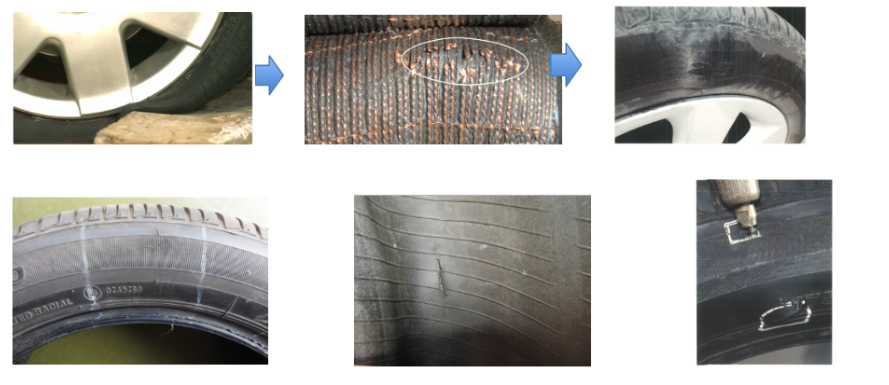
Impact Bulge / Pinch Cut Damage
Disclaimer: Images (s) shown are for illustrative purposes only. Actual product specifications, including tyre size and design, may vary.
Impact with potholes or road obstacles. Driving over potholes creates a sudden impact load on the tyre. The sidewall can get compressed between the rim and road, damaging internal cords and weakening the structure, which may lead to an impact bulge/bubble (visible externally and sometimes on the inner liner).
With higher impact, this can result in a pinch cut, typically seen on the inner liner and sometimes near the rim flange or sidewall. In severe cases, it can develop into a through-cut, visible around the rim-flange area or extending onto the sidewall.
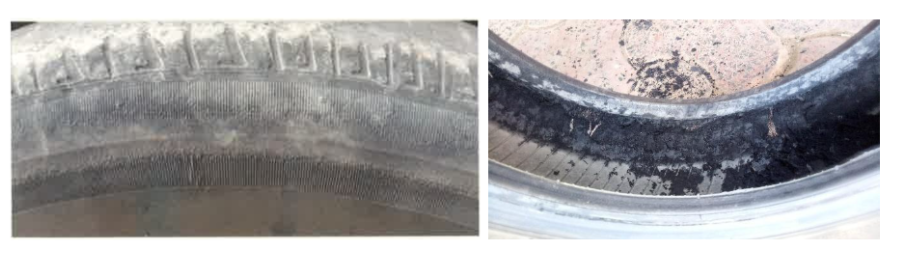
Runflat Damage
Disclaimer: Images (s) shown are for illustrative purposes only. Actual product specifications, including tyre size and design, may vary.
If a tyre is driven on low or zero inflation pressure, the sidewall begins to scrub against the road surface, creating circumferential marks on the sidewall and causing damage to the inner liner. This excessive flexing and heat can also weaken or break the body plies.
When the ply cords or body plies are damaged, the sidewall may develop bulges or bubbles, sometimes at one spot or at multiple points, depending on how long the tyre was driven while under‑inflated. This type of damage is irreversible, and the tyre must be replaced immediately.
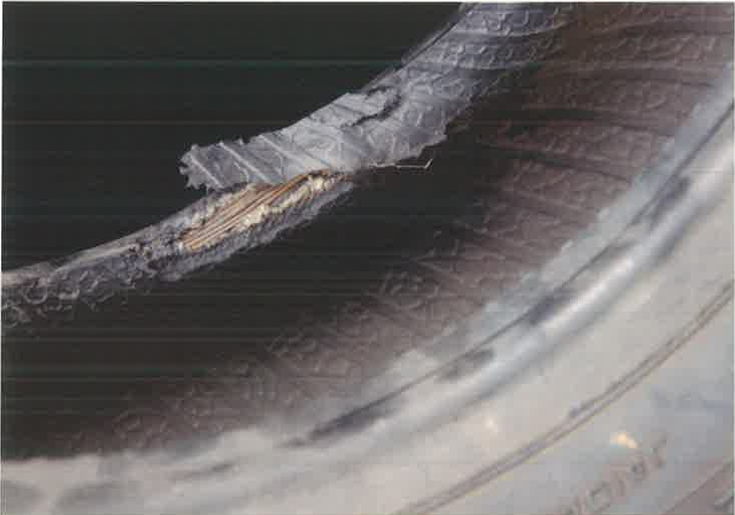
Mounting/De-mounting Damage
Disclaimer: Images (s) shown are for illustrative purposes only. Actual product specifications, including tyre size and design, may vary.
Mounting and demounting damage occurs when a tyre is improperly fitted or removed from the rim, leading to cuts in the bead rubber, body plies, or bead wires. This type of damage may appear as a bulge on the sidewall when the tyre is mounted and inflated.
Key causes include:
- Improper mounting or demounting procedures
- Insufficient or incorrect bead lubricant during mounting/demounting
- Use of damaged or improper mounting/demounting equipment
- Damaged, corroded, bent, or repeatedly straightened rims
- Incorrect rim dimensions, including improper rim width
- Mismatch between tyre bead diameter and rim diameter
Replace the damaged tyre, inspect and repair or replace the rim as per manufacturer recommendations, and ensure mounting/demounting is performed by trained personnel using the correct tools, equipment, and procedures.
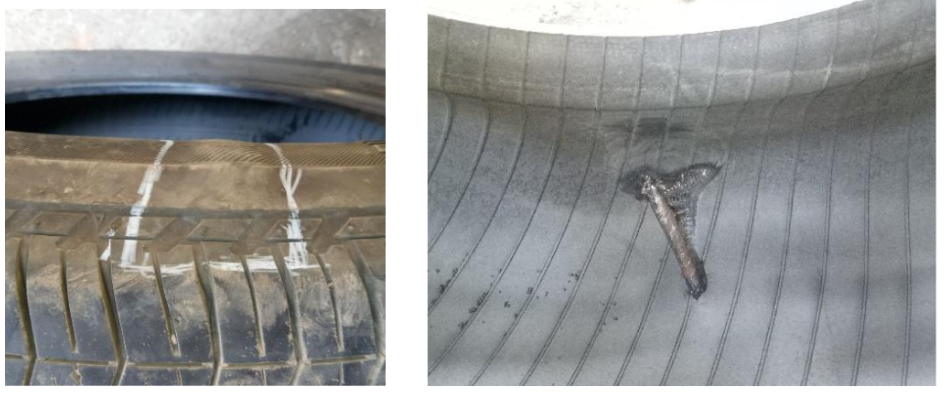
Tread Cut Penetration With Same Object Damaging Inner Liner
Disclaimer: Images (s) shown are for illustrative purposes only. Actual product specifications, including tyre size and design, may vary.
Tread cut penetration happens when a sharp object like a nail or metal piece goes deep into the tyre from the tread. It can damage the inside layer and sometimes weaken the tyre, causing a bulge on the sidewall. In more severe cases, the object may even pass through towards the sidewall, increasing the risk of sudden tyre failure.
Why You Should Replace a Tyre With a Bulge (Bubble) Immediately
A bubble in a tyre is a clear sign of internal tyre damage and should never be ignored. The weakened area may not be able to withstand normal driving pressure, increasing the risk of a sudden blowout if the bubble expands or ruptures. Instead of waiting for it to grow larger or cause handling issues, have the tyre inspected by a professional as soon as you notice the damage. In most cases, replacing the tyre is the safest solution.
How Can You Prevent Tyre Bulge (Bubble) or Take Precautionary Steps?
While not every road hazard can be avoided, there are several ways to reduce the likelihood of developing tyre bubbles.
- Drive Carefully on Poor Roads: Slow down when approaching potholes, uneven surfaces, or speed breakers. Reducing impact force can help protect your tyres from internal damage.
- Maintain Correct Tyre Pressure: Check tyre pressure regularly and follow the manufacturer's recommended levels. Proper inflation helps the tyre absorb road impacts more effectively.
- Avoid Kerb Impacts: Be mindful when parking or turning near kerbs. Repeated sidewall contact can gradually weaken the tyre structure.
- Inspect Your Tyres Regularly: Take a few moments every week to check for bulges, cuts, cracks, or unusual wear. Early detection can prevent bigger issues later.
- Replace Damaged Tyres Promptly: If you spot a bubble in a car tyre sidewall, have it inspected without delay. Ignoring the problem rarely makes it better and may increase safety risks.
Spot It Early, Replace It Promptly
A tyre bubble is more than a minor cosmetic issue; it often signals internal tyre damage. Ignoring a bubble in a tyre can affect safety, handling, and overall performance. If you notice a bulge, the safest approach is to have the tyre inspected and replaced if necessary. Taking quick action today can help ensure a safer, smoother, and more confident drive tomorrow.
Disclaimer: The information provided is for general guidance only. The author assumes no responsibility for errors or omissions, or for any consequences resulting from the use of this information.